

.jpeg?resolution=18x18&quality=95&type=webp)

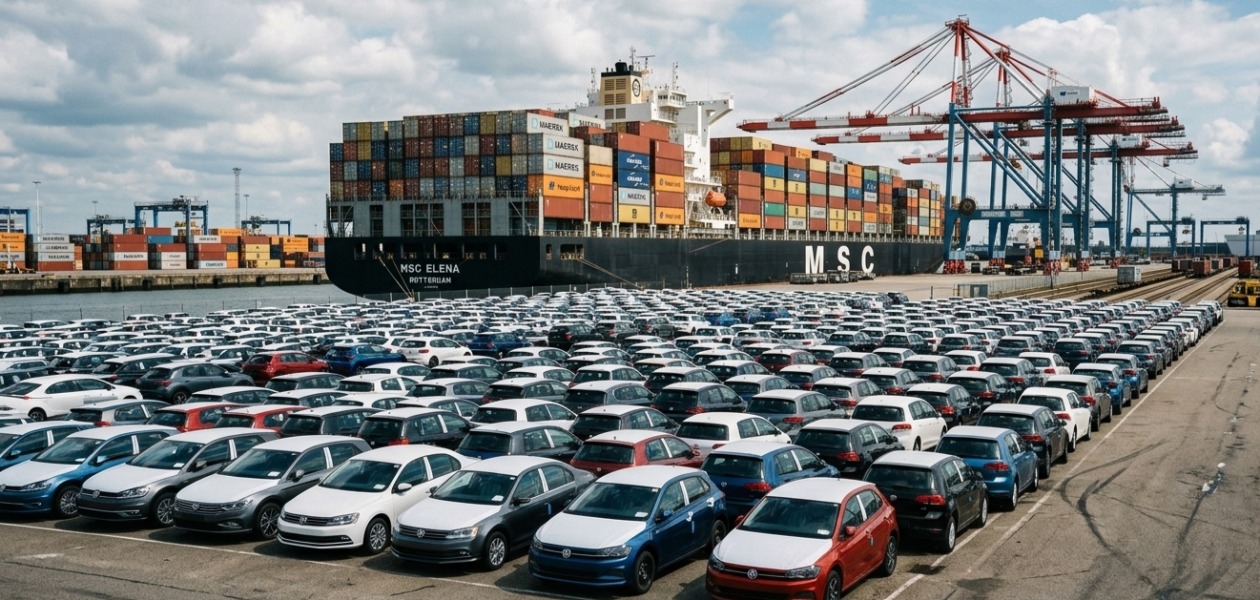
Car imports reach record high: Why more and more Dutch people are looking across the border
The Dutch car market is in full motion. Whereas in the past mainly new cars left the showrooms, we now see a clear shift toward used cars—especially those from abroad. In fact, 2025 was a record year for car imports.
According to recent figures, no fewer than 310,600 used cars were imported last year. For comparison: in 2015, that number was just over 152,000. In ten years, imports have more than doubled, and for the first time the 300,000-vehicle mark was surpassed, according to data from Independer.
Why imports are growing so rapidly
The main reason? Simple: new cars are becoming increasingly expensive. As a result, more and more consumers are turning to the used car market. This trend is clearly visible in the figures. While nearly half a million new cars were sold in 2019, that number remained below 390,000 in 2025.
At the same time, the used car market grew explosively. With more than 2.1 million used cars sold in 2025, demand is higher than ever. The Dutch supply alone is no longer sufficient, so both car dealers and consumers are increasingly looking across the border.
Importing yourself: attractive, but not without risk
For many people, it sounds appealing: importing a car yourself and saving thousands of euros. And that is indeed possible.
Take, for example, a popular hatchback from Germany that is a few years old. If you arrange everything yourself—from purchase to transport and registration—you may end up paying around €21,500. Buy the same car from a Dutch dealer, and you will quickly pay around €26,000. That’s a difference of about €4,500 (Michel Ypma, 2026).
This price difference mainly comes from:
The dealer’s margin
Warranty costs
Service and security
The middle ground: importing via a specialist
However, importing a car yourself is not for everyone. The process can be complex, especially when it comes to BPM calculations, technical inspections, and administrative procedures.
That’s why many people opt for a third option: importing through a specialized company. In that case, the price is often around €22,500 in the earlier example. You still save significantly compared to a Dutch dealer, but without the risks and administrative hassle.
Note: not every car is equally suitable
Importing yourself is especially interesting for:
Cars up to around €20,000
Common models (such as popular hatchbacks and compact cars)
For more expensive cars, such as luxury SUVs or sports cars, BPM calculations become much more complicated. In such cases, professional guidance is essentially indispensable.
Trade-ins? That remains difficult
An important point to consider: trading in your current car when purchasing abroad is virtually impossible. This makes the step toward self-importing less attractive for many people (Erik Kouwenhoven, 2026).
In addition, buying from a Dutch dealer offers advantages such as:
Warranty (often 12 months)
A physical point of contact
Less administrative hassle
Conclusion: imports are booming, but choose what suits you
The figures leave no doubt: car imports are no longer a niche, but a structural part of the market. Whether you import yourself or outsource it, the opportunities to save are substantial.
Ultimately, it’s about balance: do you want maximum savings, or convenience and security?
For an increasing number of consumers, the answer lies in working with a specialist. For example, SCL Rotterdam helps customers daily with the entire import process—from finding the right car to handling Bpm declaration, adapting to EU standards, and customs clearance.
This way, you combine the price advantage of importing with the certainty of experience and expertise—exactly what is needed in a market that is growing faster than ever. For more information, feel free to contact us!
News sources:
